How to Authenticate a Classic FlapA buyer's screening guide
The Classic Flap is among the most heavily counterfeited bags on the resale market — and one of the hardest to read, because decades of production variations circulate at once. What follows is a structured, non-destructive screening you can run before you commit. It is a way to weigh the evidence, not a substitute for a professional authentication.
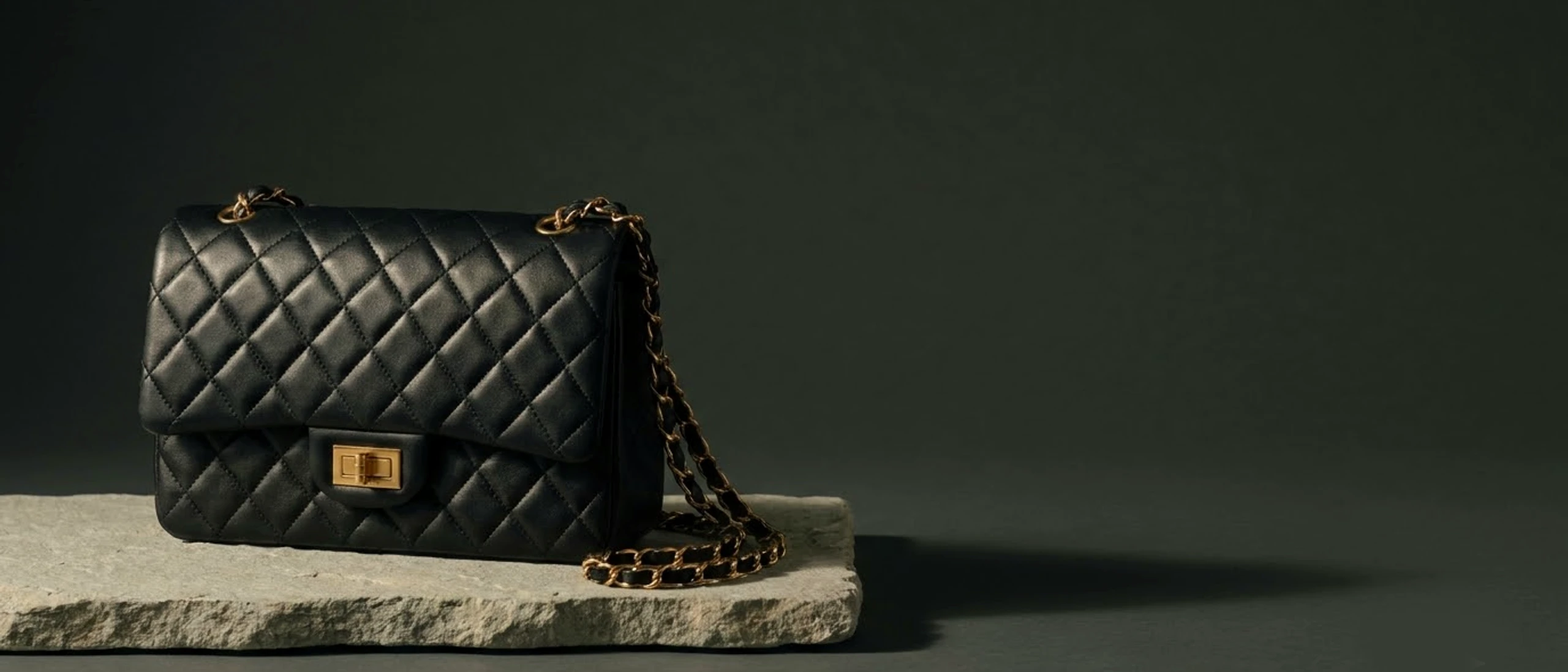
The temptation, with a bag this familiar, is to check one famous detail — the serial number, the lock — and feel reassured. That is exactly how a good counterfeit gets through. No single feature authenticates a Flap, and no single feature, on its own, always condemns one: parts can be replaced, repaired, relined or replated over a bag's life, and a tell that is decisive on a 2018 bag can be perfectly correct on a 1994 one.
So the useful question is not “is this detail right?” but “does the whole bag hold together, for the year it claims to be?” The screening below sorts what you find into three weights — a hard contradiction that stops the purchase, a strong warning that needs an expert, and supporting context — and always reads each feature against references from the bag's own era.
TAP A CHECKPOINT TO FLAG A CONCERN · THE VERDICT FOLLOWS THE HEAVIEST FLAG · THIS IS A SCREEN, NOT AN AUTHENTICATION
Screening
A disciplined first pass you can do yourself — from photos, then in hand — to catch obvious problems before money moves. It tells you when to keep going and when to stop.
Authentication
An expert's decision, made with reference libraries, provenance, and sometimes physical verification. A valid-looking serial number no longer settles it on its own; full-scope evaluation does.
Start with the seller, not the bag
Before you examine a stitch, examine the transaction — it is the cheapest protection you have. A Flap that a professional has already passed shifts the risk off your shoulders, and that is worth paying for.
The serial sticker and the card
From the mid-1980s, Chanel placed a printed serial sticker inside the bag — usually in an interior pocket or along a seam — paired with a matching printed authenticity card. It is the single most abused point on the bag, precisely because buyers were trained to “check the number.”
FLAT, MATTE LABEL
SHIFTS IN THE LIGHT
RECENT PRODUCTION
Read three things: the digit count, which grew over the decades, so the correct range depends on the claimed year; whether the sticker matches the card; and the sticker's own construction — typeface, ink and anti-tamper backing all changed. A valid-looking number tells you the counterfeiter did their homework; it is necessary, not sufficient.
“A correct serial does not authenticate a bag. A serial that can't be true for the year it claims does end the conversation.
Hologram, then the microchip
The authentication method itself has to be era-consistent. From the late 1980s the sticker gained an increasingly sophisticated anti-counterfeit treatment; in the early 2020s Chanel began moving from the printed sticker to an embedded microchip. The rule is simple: the method must match the year the seller claims.
Because the transition is recent and still rolling out, treat the chip as one more thing that has to fit the claimed year — not as a standalone pass or fail.
Hardware, weight and plating
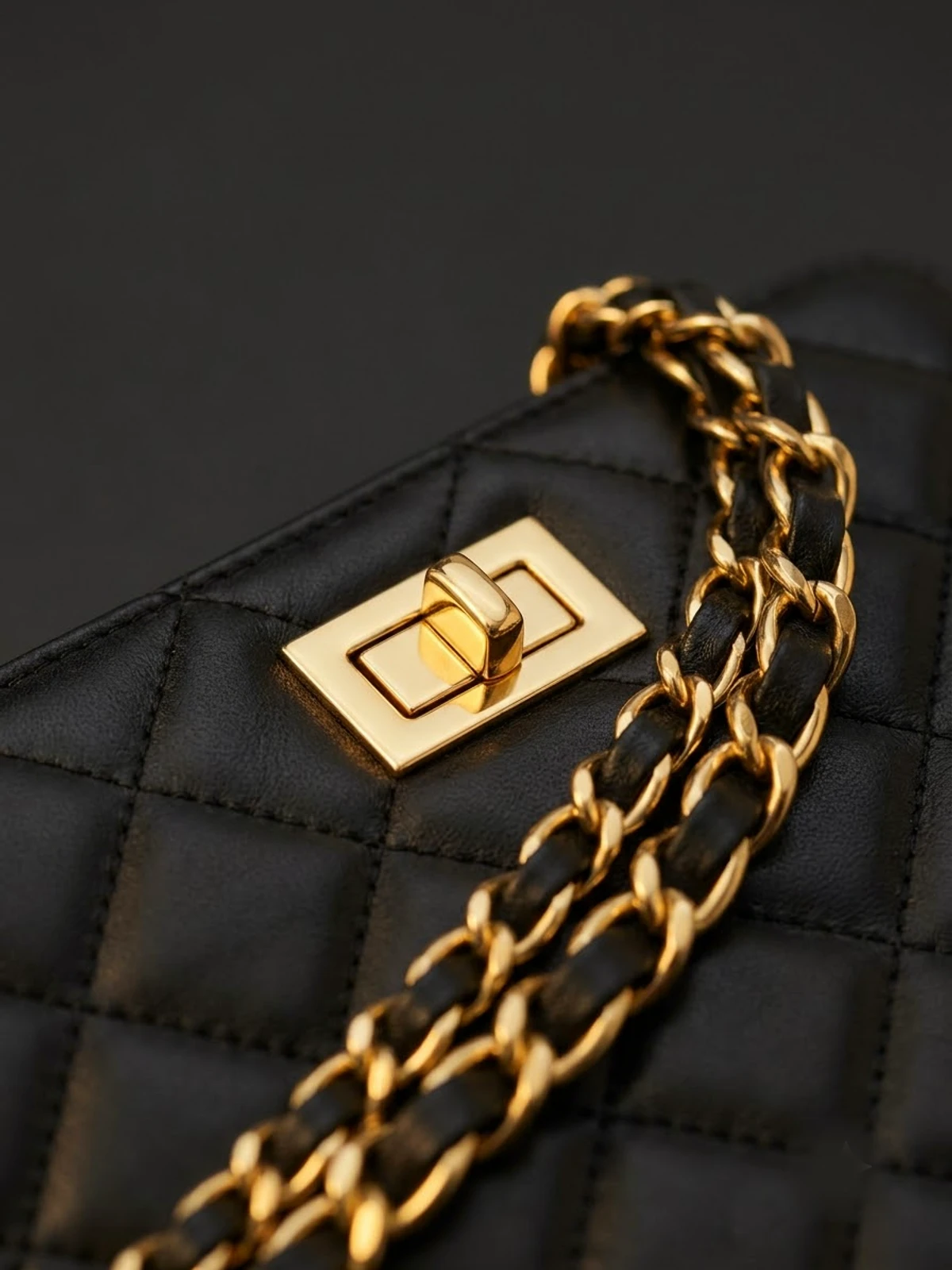
Hardware — chain, clasp, feet, interior stud — is where counterfeiters economise, because doing it well is expensive. Genuine hardware has real heft; the interlocking chain is substantial and the leather woven through it is threaded cleanly. Lightweight, hollow or tinny metal is a giveaway.
Plating should be even — no bubbling, flaking or casting seams — in a tone consistent with the claimed line and year. Engraving is shallow, crisp and evenly spaced; counterfeit engraving tends to be too deep, too shallow, blobby or subtly uneven.
The CC lock and the turn-lock
The front closure has an exacting geometry. On the classic turn-lock the two C's overlap in a specific way — a detail counterfeiters frequently reverse or muddle. The two C's should be even in width, cleanly formed, and the whole lock symmetrical; it should seat precisely, without rattle.
EVEN, SYMMETRICAL
C'S FACE OUTWARD
UNEVEN C WIDTHS
Reversed overlap or a geometry that can't exist for the claimed era is a hard failure. Fat, thin or lopsided C's are a strong warning; roughness or play in the turn is both a quality tell and, at this price, a functional concern.
Quilting alignment and the chevron
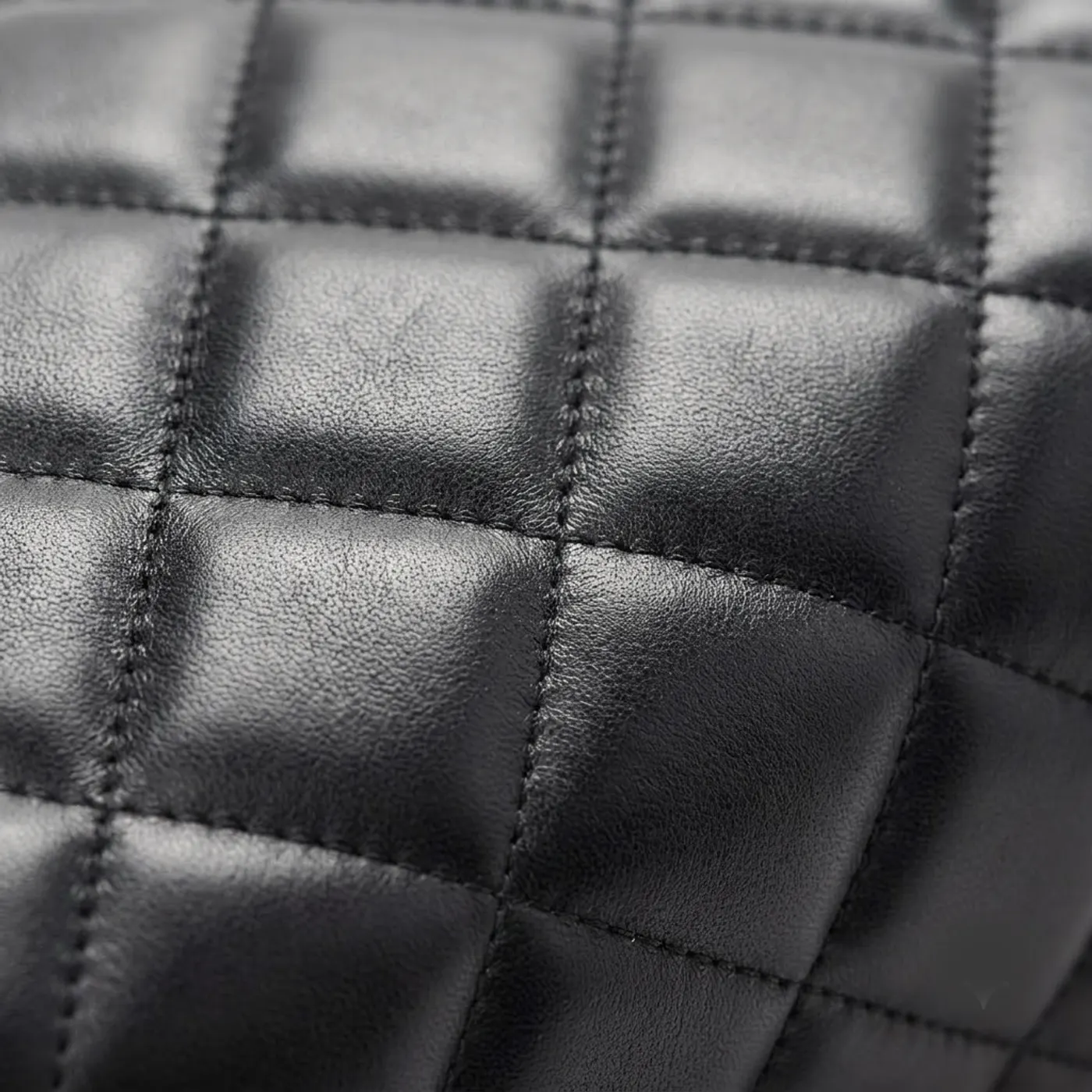
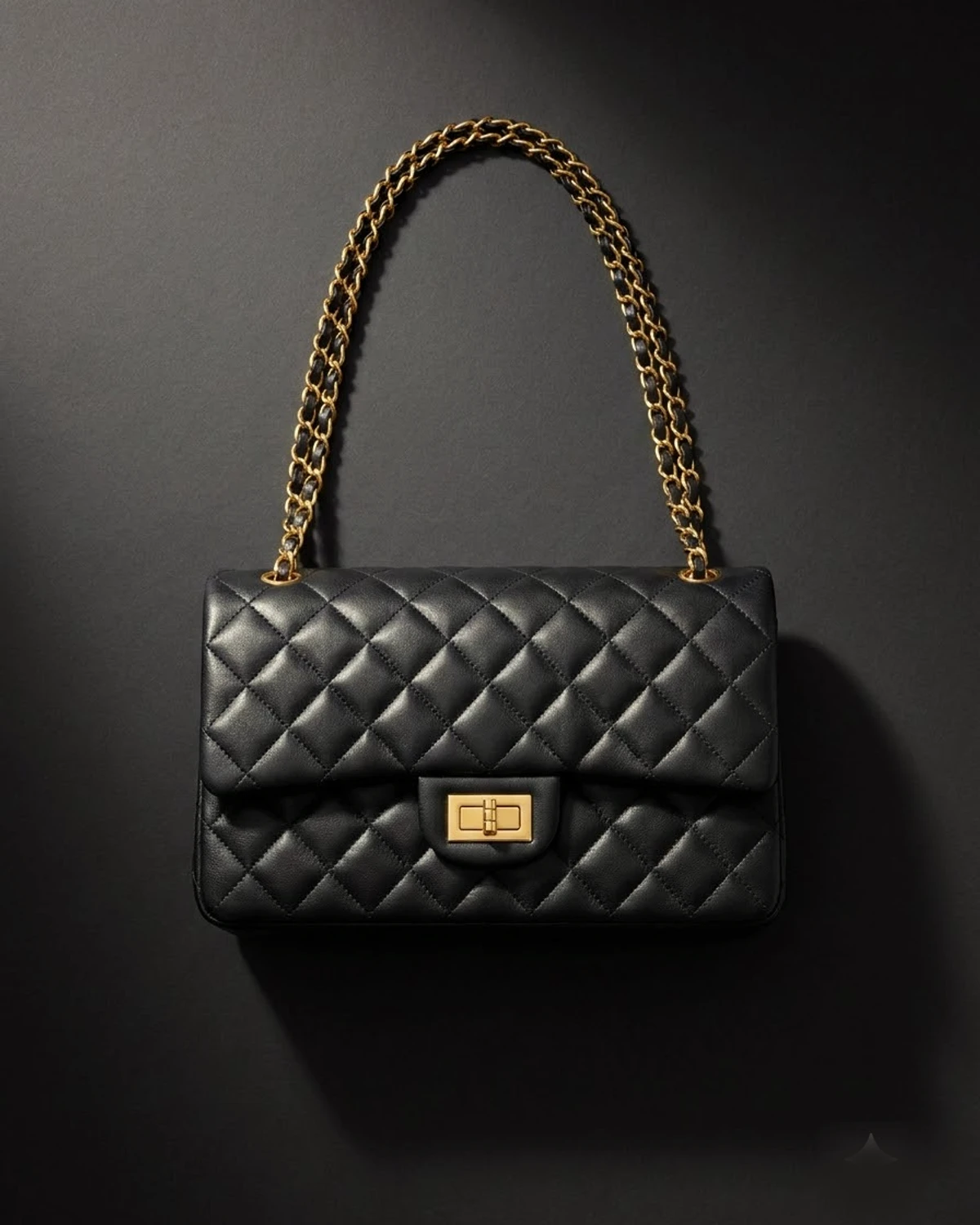
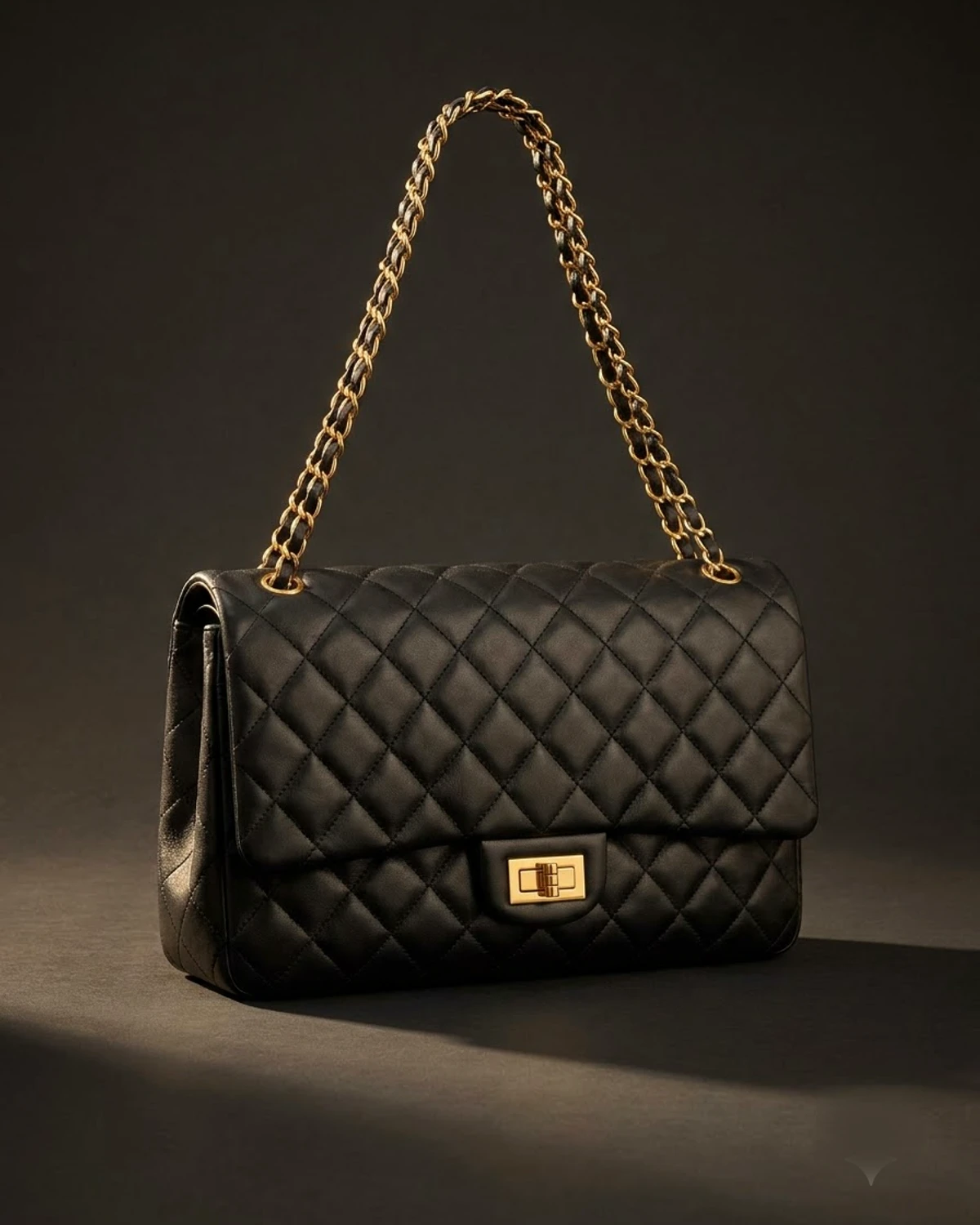
Chanel's diamond quilting is engineered, not decorative filler. On a genuine bag the diamonds meet cleanly where panels join, the flap quilting aligns with the body, and the lock sits centred within its diamonds. Fakes frequently show quilting that jumps or breaks at a seam.
DIAMONDS MEET
PATTERN BREAKS
V FAILS TO MIRROR
On chevron (V-stitch) flaps the point of the V should meet precisely at the centre seam and mirror on each side. Proportion errors are hard for counterfeiters to fix, which is what makes alignment such a useful screen.
Caviar, lambskin and the stitch
The Flap ships primarily in two leathers, each with its own tells. The point is not connoisseurship but consistency: the grain must match the leather the listing claims — and vintage leather does not behave like new.
Stitching follows the same logic: even, consistent tension along the quilting and seams, with a stitch count that stays constant along a single line. Wandering density, loose threads or puckered seams point to a problem.
CONSTANT COUNT
DENSITY DRIFT
Read the inside as carefully as the outside: the heat stamp should be crisp, evenly pressed and era-appropriate in wording and foil tone; the country of origin (France or Italy) should be plausible and consistent with the bag's other tells. Fine leather smells like fine leather — a strong chemical odour is a warning, not a quirk.
Request these photos
Most screening happens before the bag is ever in your hands. Ask for these specific shots — a seller with a genuine bag sends them without fuss; hesitation or “the light's bad” is itself information.
- 01 The serial sticker (or chip plate) in focus, beside the authenticity card
- 02 The interior heat stamp — straight-on, evenly lit, readable
- 03 The CC turn-lock face-on, plus the reverse of the flap
- 04 The base, feet and piping, and each bottom corner
- 05 A hardware macro — chain links, the woven leather, the interior stud
- 06 The quilting where two panels meet at a seam (and the chevron point, if applicable)
- 07 Any wear, repair, replating or relining — asked for explicitly, not hidden
The decision
Screening earns you one of three moves. Read the whole bag, weigh the heaviest concern, and choose deliberately — the goal is never to “rank” the bag, only to protect your money and your peace of mind.
A last word on where we sit. A bag's price only means something once you're sure the bag is real; authentication is the floor beneath every number. When we watch this market we prioritise authenticated listings for exactly that reason — and none of this is a substitute for an expert's eye. It is here so a careful buyer walks away from the obvious traps, and knows precisely what to ask before the rest.
The plates
NON-DESTRUCTIVE INSPECTION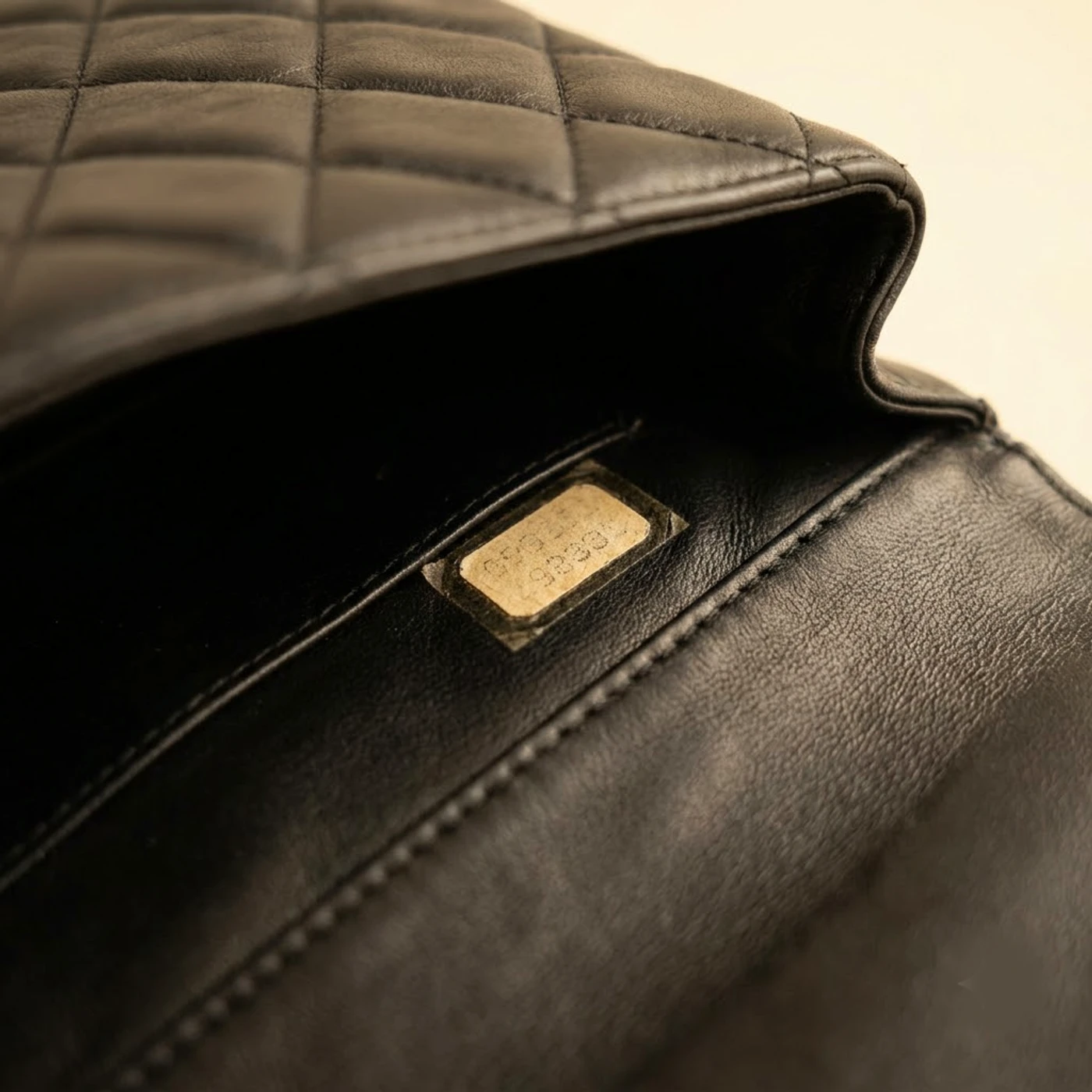

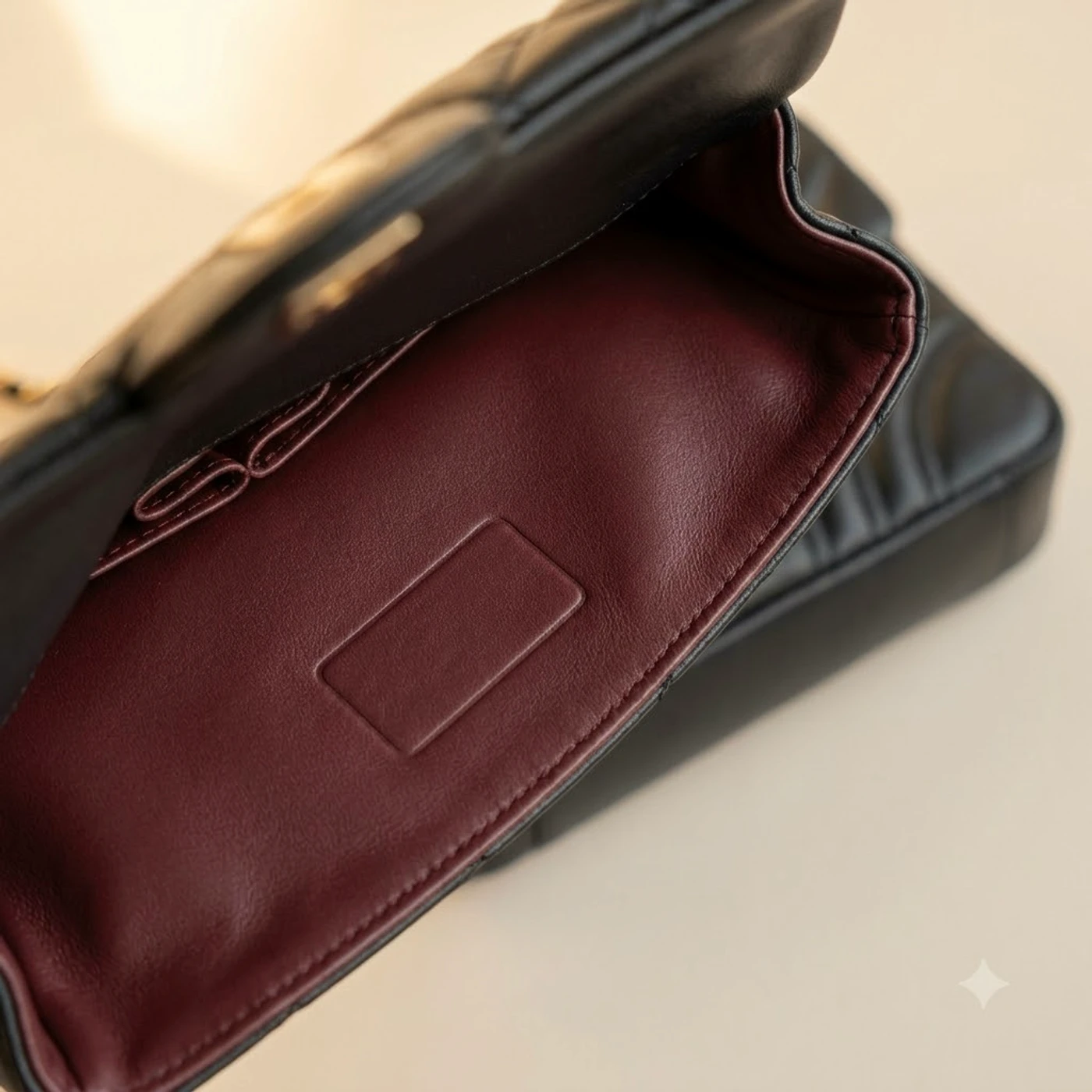
Bags in this piece
THE ARCHIVE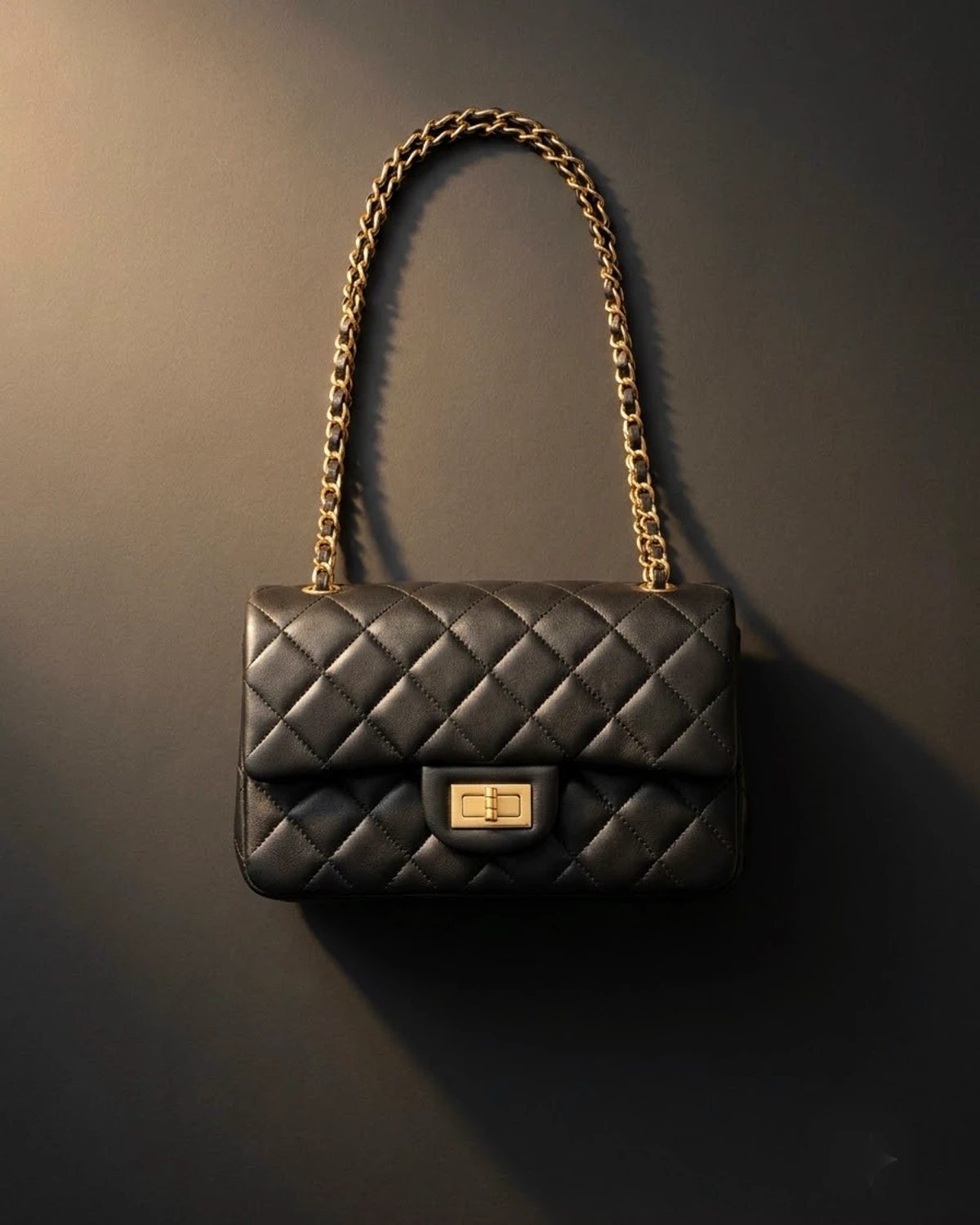
Set your all-in ceiling. We watch the authenticated ones.
Tell us the size and your number. We'll note when a verified Classic Flap falls beneath its comparable median — the small, medium and jumbo each trade differently. One note when it matters; nothing in between.
INDEPENDENT & BUYER-SIDE. WE MAY EARN A REFERRAL FEE WHEN YOU BUY THROUGH A LINK — IT NEVER CHANGES WHAT WE RECOMMEND. NOT INVESTMENT ADVICE. THIS GUIDE IS A SCREEN, NOT AN AUTHENTICATION.