How to Authenticate a BirkinA buyer's field guide
The most counterfeited bag on earth. A non-destructive walkthrough of the stamps, stitching, hardware and leather tells that separate a genuine bag from an excellent fake — and why the final word still belongs to a professional.
No handbag on earth is counterfeited more determinedly. The reason is plain economics: a genuine bag of this class starts in five figures on the resale market and climbs from there, so the incentive to fake one convincingly is enormous. The best of the current counterfeits clear hurdles that tripped up their makers a decade ago, which means the old shortcuts — “check the font” — are no longer enough on their own.
This guide is written for the buyer, not the reseller. It will not teach anyone to fake a bag, and it will not pretend a checklist can replace a trained eye. What it will do is give you the structured, non-destructive inspection a careful buyer runs before wiring a large sum — so you can walk away early from an obvious problem, and know exactly which questions to ask before committing to a bag that looks right.
TAP ANY CHECKPOINT TO MARK IT FAILED · IF ANY SINGLE ELEMENT IS WRONG, THE BAG IS WRONG — NO MATTER HOW CONVINCING THE REST
Start with the seller, not the bag
Before you examine a stitch, examine the transaction. The single most protective decision you can make is where you buy. A bag that has already passed a professional's hands before it reaches you shifts the risk off your shoulders — that is worth paying for.
Read the era, not the name
Pressed into the leather — usually beneath the front strap or inside — a small blind stamp encodes when and by whom the bag was made. Genuine stamps are crisp, evenly pressed and perfectly aligned; the impression is clean, never blobby or double-struck.
EARLIER CONVENTION
MIDDLE CONVENTION
RECENT CONVENTION
Two things to read: the date code, whose format has changed over the decades, and the small craftsman and atelier marks beside it. Because the convention has changed, the correct code depends entirely on the bag's claimed age — a mismatch between the stated year and the stamp's format is a red flag. Compare against verified references from the same era, never a random genuine bag from another decade.
The counterfeiter's problem is precision. These stamps are struck by hand tools to an exacting standard; fakes frequently show letterforms a touch too thick, spacing a hair uneven, or an impression sitting at a subtle angle.
“A correct date stamp does not authenticate a bag. But an incorrect one condemns it.
The signature hardest to fake
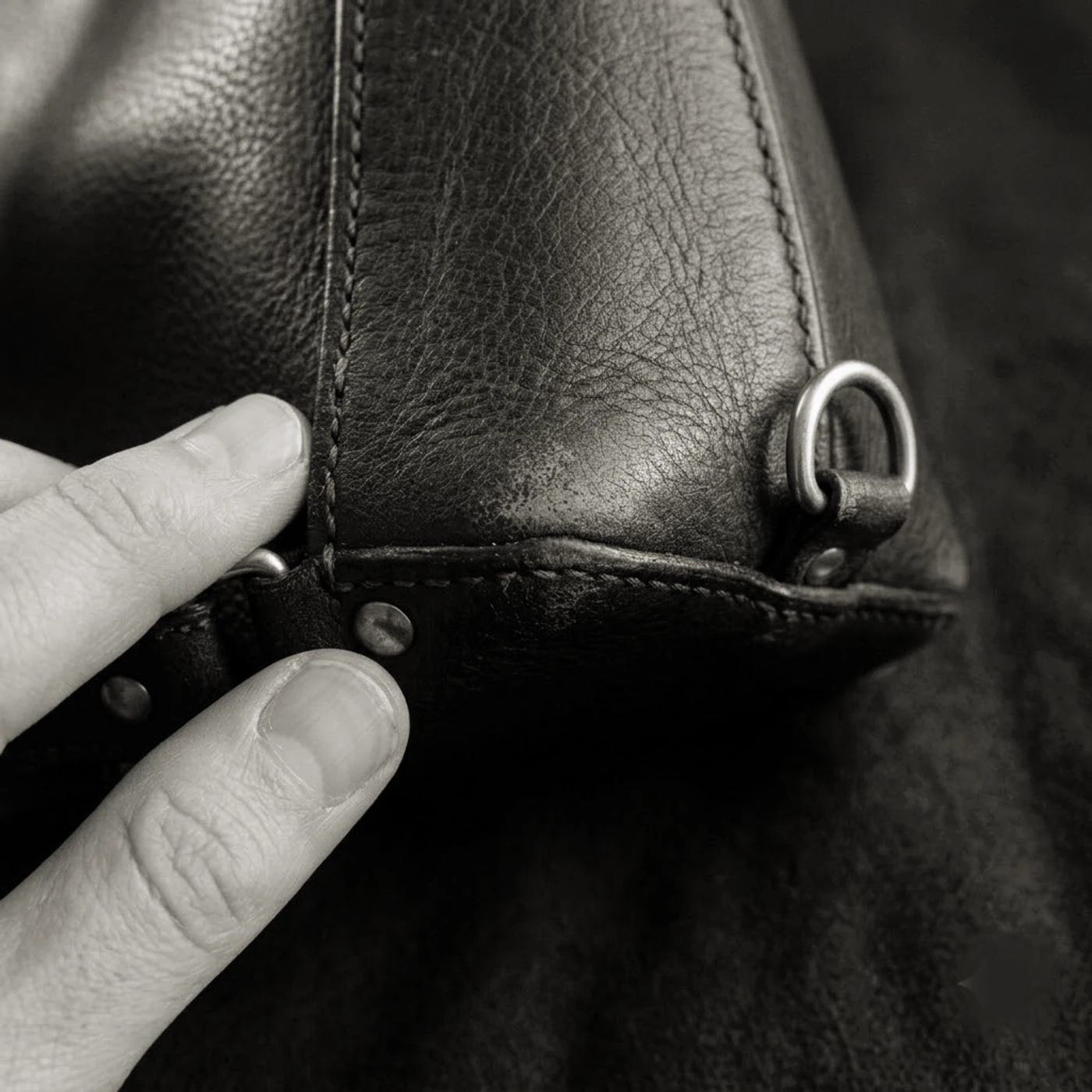
The key seams are saddle-stitched by hand. This is where cost and skill concentrate, and where many otherwise-good fakes fall down. Hand stitching is remarkably even but never machine-perfect: genuine stitches sit at a consistent, gentle slant with uniform tension.
CONSISTENT SLANT
DEAD STRAIGHT
DENSITY DRIFT
Thread matters too: a waxed thread ages to a particular patina, and bright, plasticky or fraying thread on a supposedly aged bag is inconsistent. You do not need to count every stitch. Look at a well-lit close-up of the handles and the base seam and ask one question — does this look like the disciplined hand of a trained saddler, or a machine imitating one?
Hardware and the turn-lock
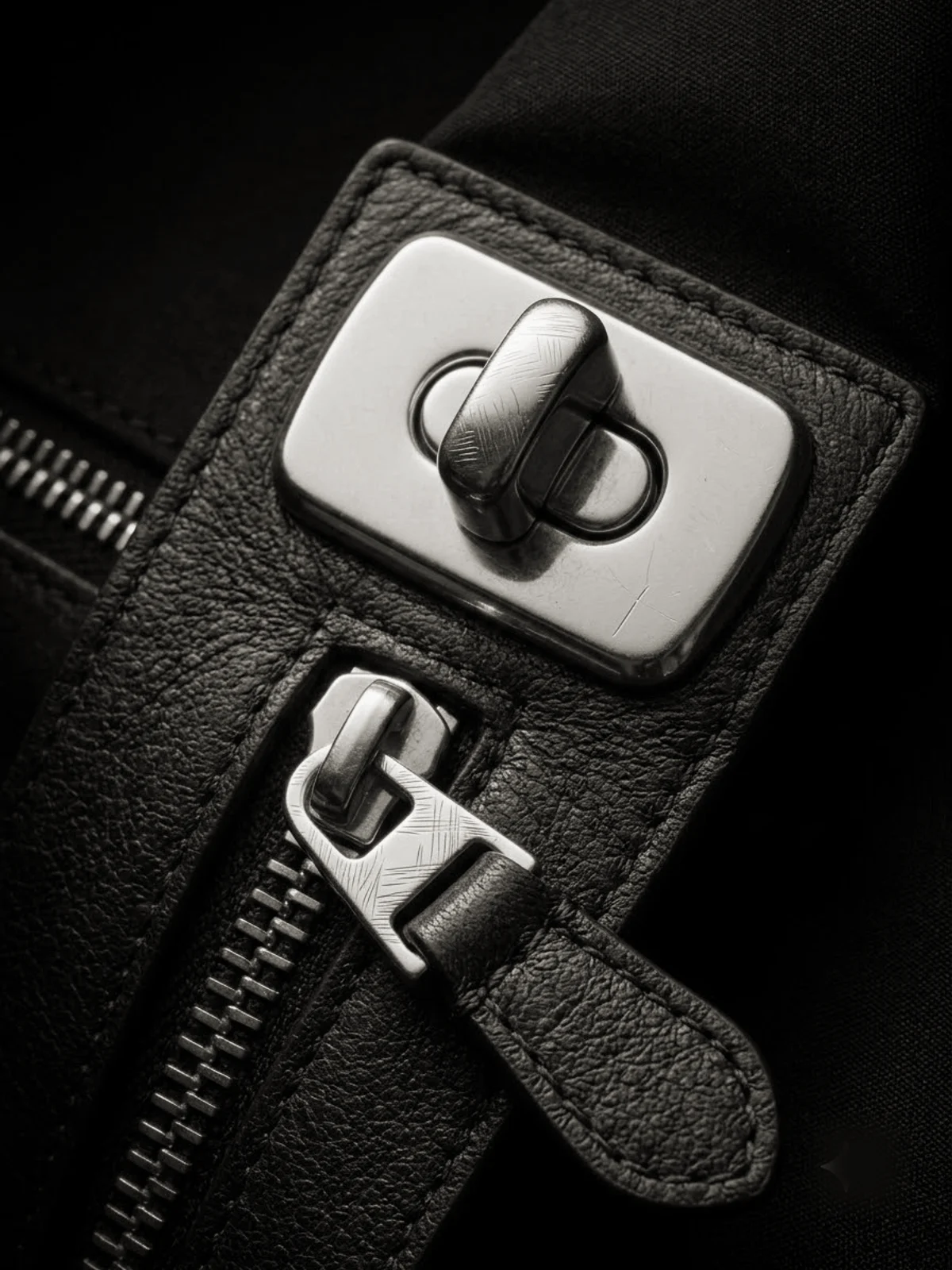
The metal furniture is heavy, precisely finished and engraved with restraint. Genuine hardware has real heft and an even plating — no bubbling, no flaking, no casting seams. Lightweight or tinny metal is a giveaway.
Engraving should be shallow, clean and evenly spaced; counterfeit engraving is often too deep, too shallow, or subtly misaligned. The turn-lock should operate smoothly and seat precisely — play or roughness in the closure is both a quality tell and, at this price, a functional concern.
Remember that hardware can be replated or swapped over a bag's life. Treat it as one input among many, never a sole verdict.
Leather, grain and structure
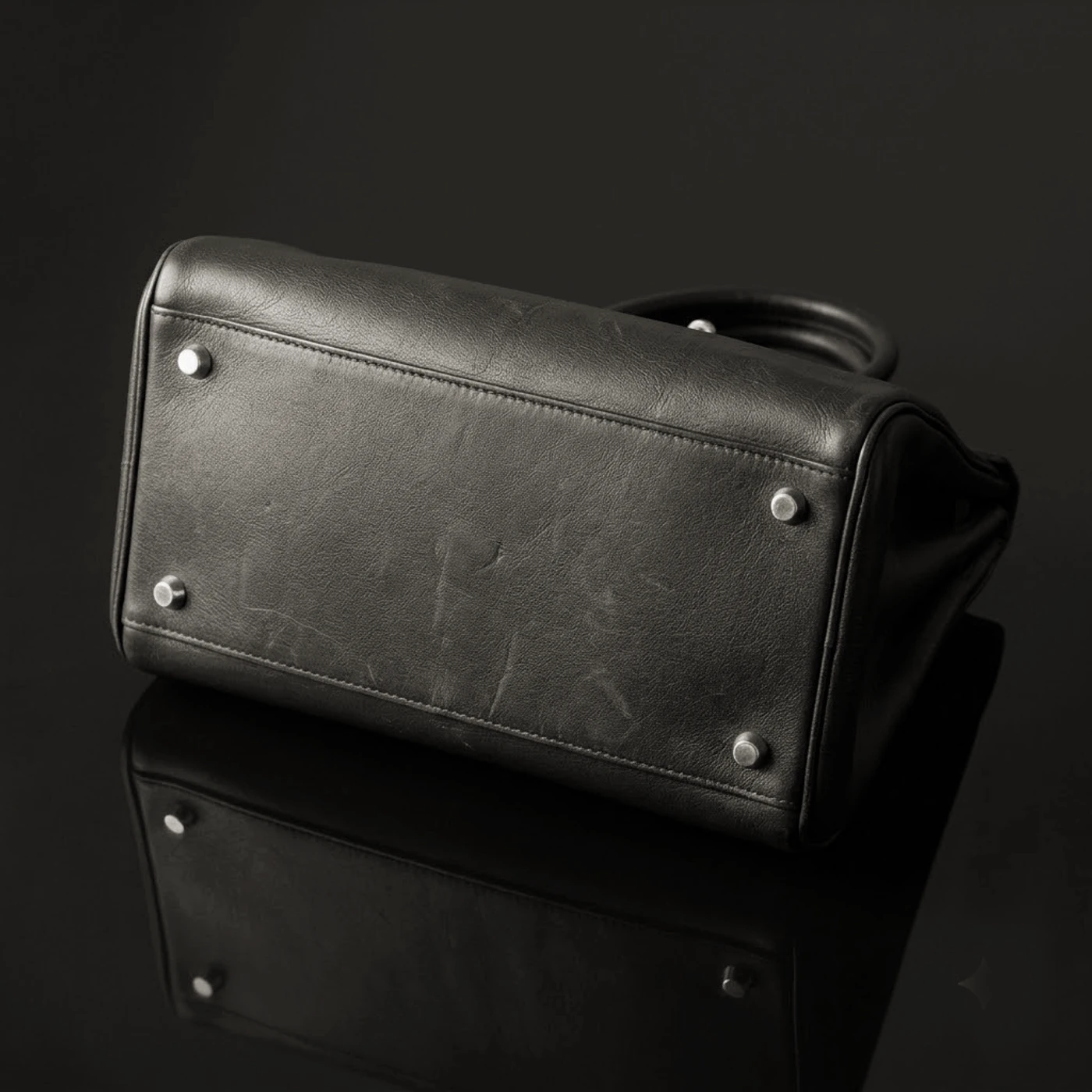
The house works in a family of leathers, each with its own grain, weight and behaviour. The point here is not connoisseurship but consistency: the grain must match the leather the listing claims. A bag described as one and grained like another is either mislabelled or fake.
Structure follows the same logic. Different leathers hold shape differently, but every genuine bag has a considered, balanced silhouette; one that slumps oddly, has mushy corners or feels flimsy in the hand is suspect. Inside, the lining and finishing should be as clean as the exterior — counterfeiters economise where buyers look less. And fine leather smells like fine leather. A strong chemical odour is a warning, not a quirk.
Size and proportion
Counterfeits are frequently a few millimetres off. The named sizes carry tightly consistent proportions, and a fake would need the genuine patterns to fix them — which is why proportion errors persist even on otherwise-accomplished copies.
MEASURE AGAINST VERIFIED
REFERENCES FOR THE SIZE —
NOT AGAINST THIS DRAWING.
If the dimensions, the handle length or the ratio of height to width feel subtly wrong against verified references for that size, trust the discomfort.
Putting it together
Run these in order. Stop at the first hard failure.
Why the last word isn't yours
Everything above helps you screen a bag and avoid obvious traps. It does not make you an authenticator. The best counterfeits are engineered specifically to pass amateur checklists — and some genuine bags, vintage pieces, unusual leathers and factory variations among them, can look wrong to an untrained eye while being perfectly authentic.
That is also, not coincidentally, how we think about price. A bag's number only means something once you are sure the bag is real; authentication is the floor beneath every price signal. When we watch this market we prioritise authenticated listings for exactly that reason — a cheap counterfeit is not a deal, it is a loss.
The plates
NON-DESTRUCTIVE INSPECTION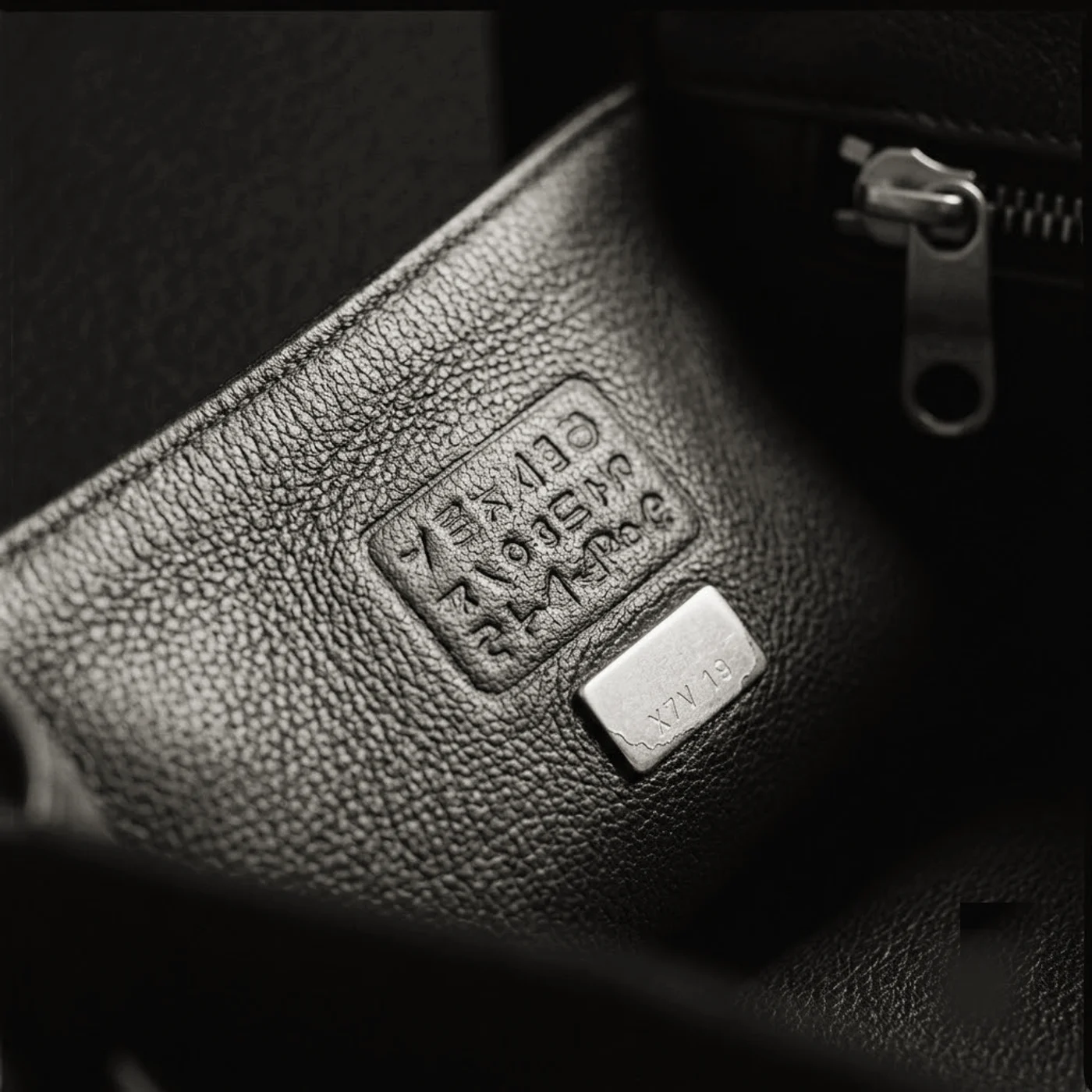
If a grail of this class is on your list, put it on your watchlist and set your ceiling. We will surface authenticated listings and tell you when one falls genuinely beneath its comparables — so the only thing left to decide is whether it is the one.
Bags in this piece
THE ARCHIVE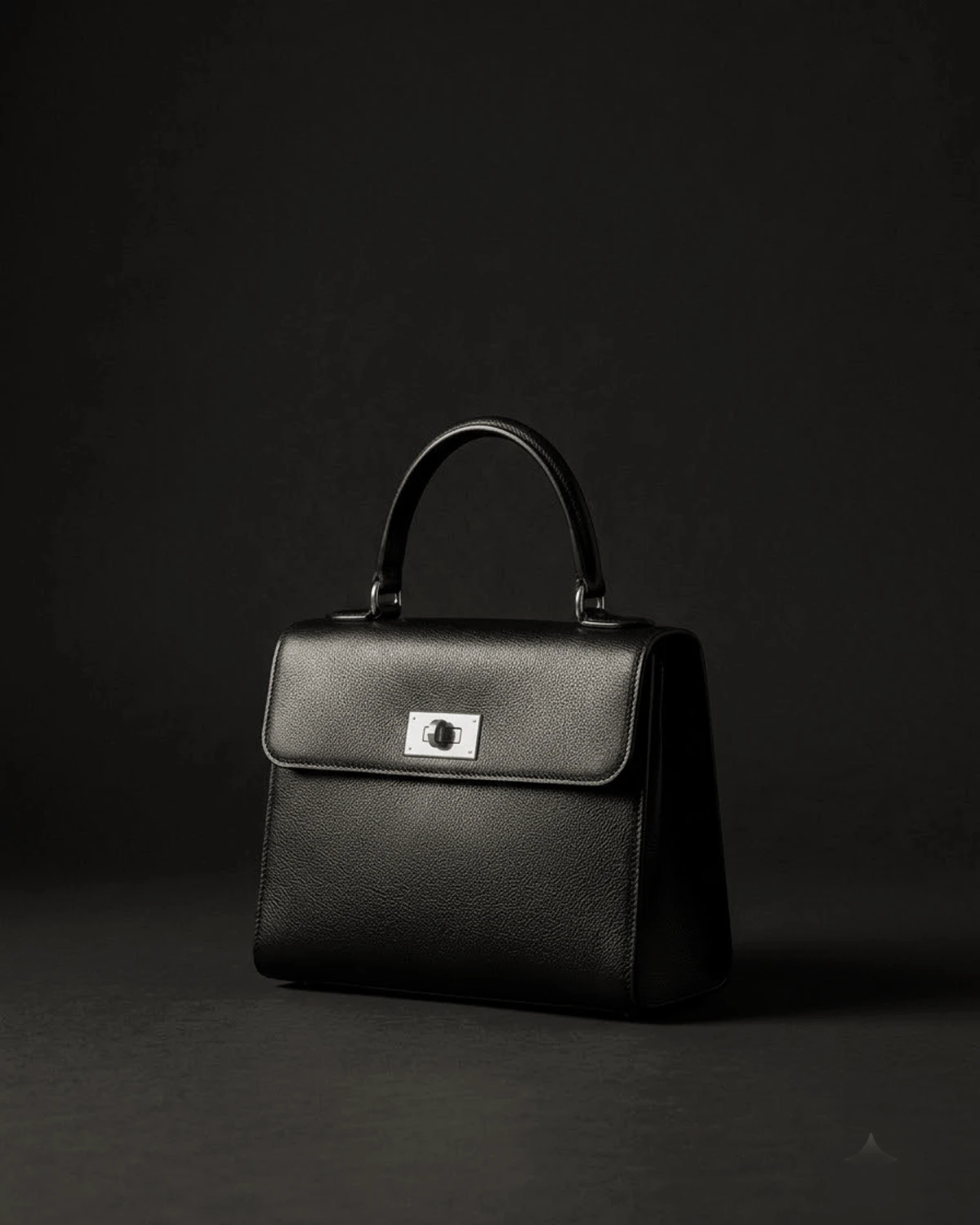
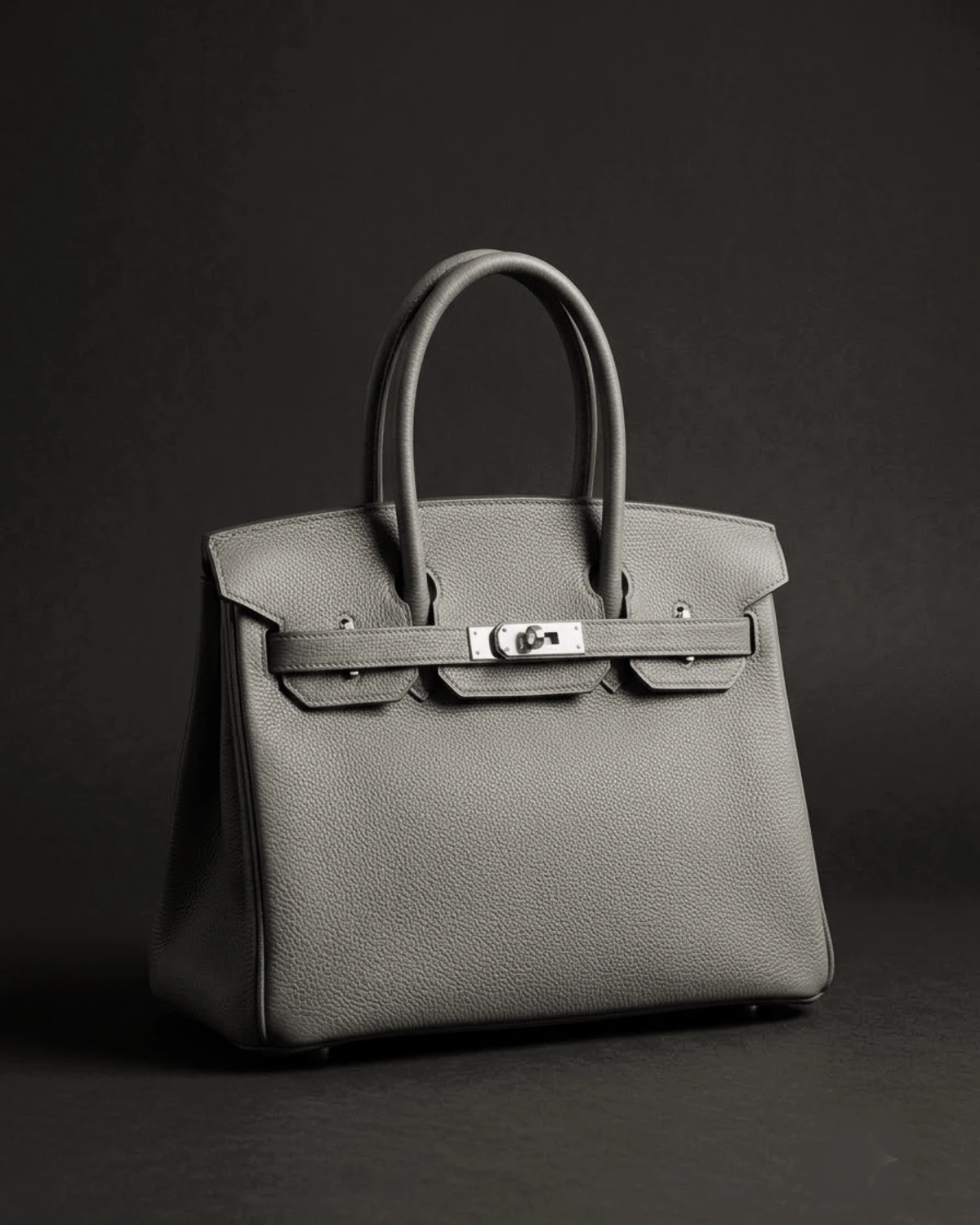
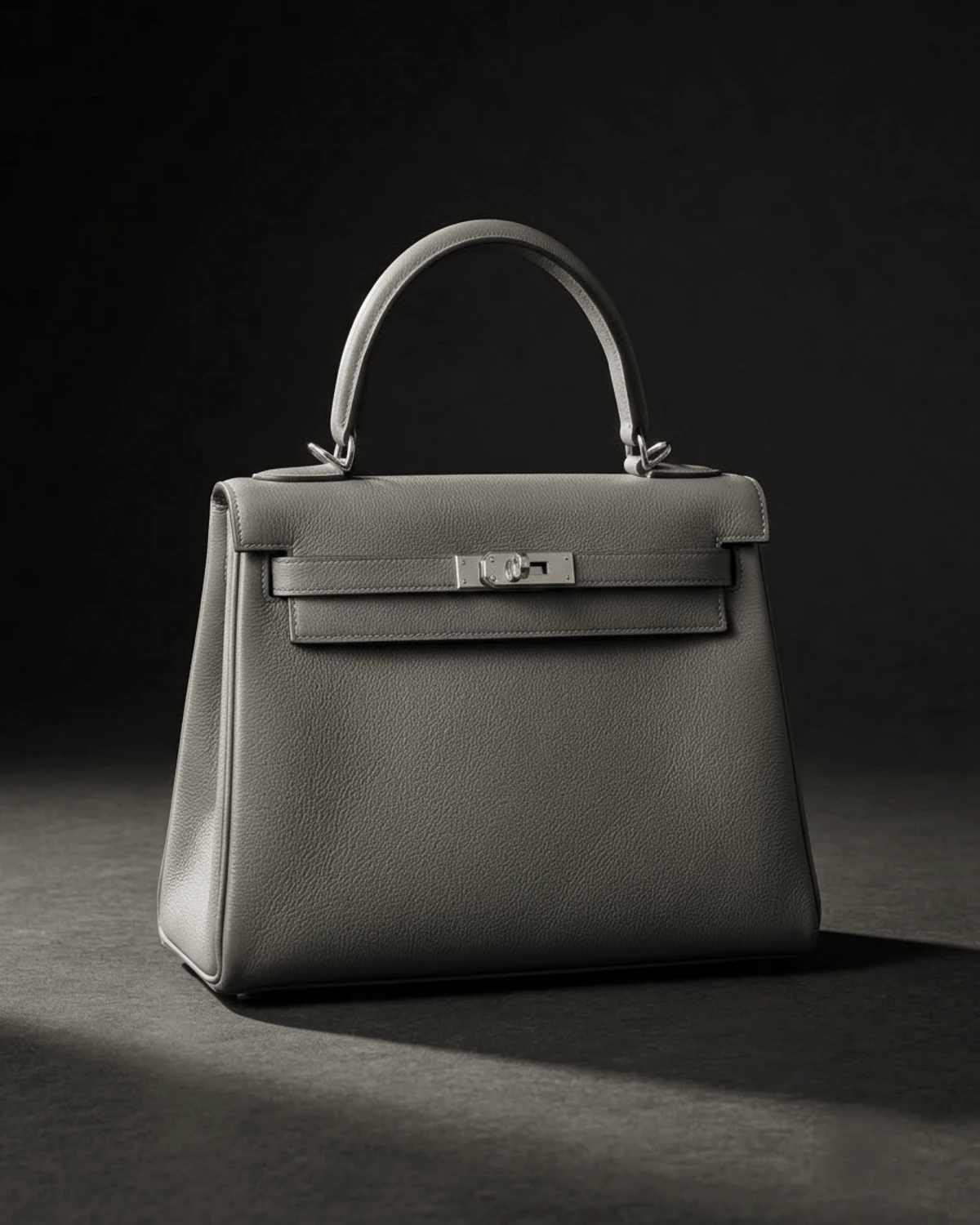
Set your all-in ceiling. We watch the authenticated ones.
One note, the moment a verified listing falls beneath its comparable median. Nothing in between.
INDEPENDENT & BUYER-SIDE. WE MAY EARN A REFERRAL FEE WHEN YOU BUY THROUGH A LINK — IT NEVER CHANGES WHAT WE RECOMMEND. NOT INVESTMENT ADVICE. THIS GUIDE IS A SCREEN, NOT AN AUTHENTICATION.